
High-heels feet media collection

Sexy Feet in High Heels: Pictures, Styles & Poses

Browse sexy feet in high heels pictures and videos by shoe style, pose, toe visibility, color, pedicure, hosiery, and camera angle.

Shape created by the shoe

How High Heels Change the Foot's Silhouette

A high heel changes the visible relationship between the toes, forefoot, arch, heel, and ankle. Shoe structure decides which parts stay exposed, while camera position determines whether the lifted line or the footwear receives more attention.

01

Arch and Ankle Lines

Raising the heel tips the foot forward and creates a longer diagonal from the ankle toward the toes. A side profile makes that angle easiest to read and can keep the arch, heel height, and lower leg in one continuous line. From the front, the same pose emphasizes balance and symmetry instead. A low camera position makes the shoe heel appear taller; a camera placed nearer ankle height preserves a more even relationship between the foot and shoe.
02

Toe Visibility and Front Shape

Open-toe and peep-toe styles reveal nail color, toe spacing, and the front edge of the foot. Strappy sandals expose more skin between the toe box and ankle, while a classic pump hides the toes and lets the shoe's pointed, almond, or rounded front define the outline. Neither view is automatically more detailed: an open style shows the toes, whereas a closed style can make the arch, instep, and ankle line the main subject.

03

Straps, Platforms, and Clear Materials

Thin straps divide the foot into smaller visible sections and can direct the eye from the toes toward the ankle. A platform adds visual weight beneath the forefoot, which balances a tall heel differently from a thin sole. Clear heels or transparent straps leave more of the foot visible, but reflections can compete with skin and nail detail. Side lighting clarifies transparent edges; soft frontal light reduces glare and keeps the foot readable.

Choose the footwear focus

Strappy Stilettos, Open Toes, or Classic Pumps

Each heel style frames the foot differently. The useful comparison is not just shoe color or heel height, but which lines remain visible and where the composition places its strongest contrast.

01

Strappy Stilettos

Strappy stilettos combine a narrow heel with visible sections of the foot. Front and three-quarter views show how straps cross the toes and instep, while a side view emphasizes the height of the heel and the curve beneath the arch. Minimal straps keep more skin visible; multiple straps create a busier geometric pattern that works best against a simple background.

02

Open-Toe and Peep-Toe Heels

Open-toe heels leave the full front of the toes visible, making them suitable for pedicure detail and toe rings. A peep-toe opening reveals a smaller area and creates a tighter frame around the nail color. High-heel sandals can show both toe detail and ankle straps, so a slightly wider crop is useful when the relationship between the front and back of the shoe matters.

03

Classic Pumps and Closed-Toe Heels

Classic pumps conceal the toes and create a continuous shoe silhouette from the front to the heel. Pointed pumps extend the line beyond the foot, while almond and rounded fronts look more compact. Because the toe area is hidden, useful compositions often shift attention to the instep, arch, ankle, heel counter, or the contrast between shoe color and skin or hosiery.

Build contrast around the feet

Shoe Color, Pedicure, Accessories, and Hosiery

Color and material decide whether the eye lands first on the shoe, the toes, or the complete leg-and-foot line. A limited palette keeps small details legible; stronger contrasts make individual elements compete for attention.

01

Shoe and Nail Color

Black heels create a strong outline against light skin or a pale background, while red, gold, pink, green, or purple heels can become the dominant color in the frame. With open toes, nail polish can either echo the shoe or separate from it: red-on-red feels coordinated, while white or French-tip nails remain distinct against a saturated shoe. Neutral backgrounds make these relationships easier to compare than patterned settings.

02

Pedicure, Toe Rings, and Anklets

A close crop can show polish edges, gloss, toe rings, and the points where straps meet the foot. In a wider seated or standing pose, those details become accents rather than the main subject. Toe rings are clearest with open footwear and uncluttered straps; anklets work better when the frame includes enough space above the shoe collar to keep the jewelry separate from buckles.

03

Stockings, Pantyhose, and Fishnets

Sheer hosiery softens skin detail while preserving the outline of the foot and shoe. Dark stockings increase contrast around open sections, and fishnets add a visible grid that changes scale between the toes, instep, and ankle. Glossy shoes, polished nails, and reflective hosiery can all catch the same light, so softer illumination helps prevent highlights from merging into one bright area.

Frame the line or the detail

Standing, Seated, Close-Up, and Motion-Focused Views

A pose changes which part of the high-heel shape is easiest to inspect. Stable standing views show the full lifted line, seated poses allow more controlled foot placement, and motion introduces changes that no single frame can hold.

01

Side Profiles and Standing Poses

A side profile can include the toes, arch, heel, and ankle in one readable outline. Standing with both feet aligned emphasizes symmetry; placing one foot slightly forward separates the shoes and prevents their contours from overlapping. A rear three-quarter angle shifts attention toward the heel counter and ankle straps while retaining enough side view to show heel height.

02

Seated Poses and Crossed Ankles

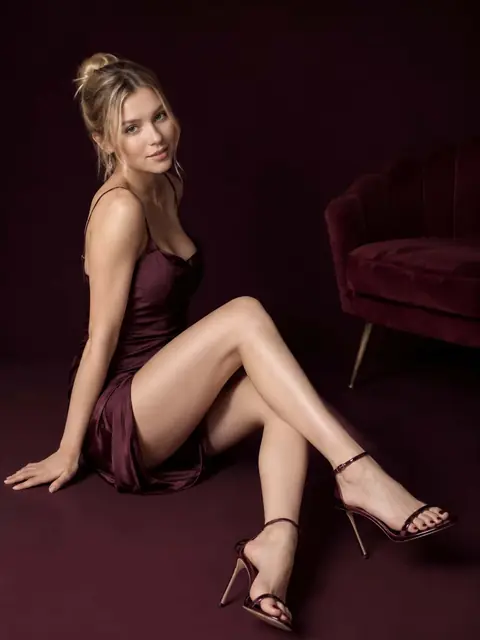
A seated pose reduces overlap between the lower legs and gives each foot more freedom to turn toward the camera. Crossed ankles create a compact composition and show two shoes at different angles, but the rear foot can disappear if the crop is too tight. Letting one toe rest lightly ahead of the other keeps both silhouettes visible and makes differences in strap placement easier to compare.

03

Close-Ups and Movement

Close-ups are best for open-toe detail, buckles, strap texture, clear materials, and nail color. A wider motion-focused frame can show a step, ankle turn, shoe adjustment, or the transition from a flat resting position to a lifted heel. Keep enough room in front of the toes and behind the heel so movement does not leave the frame.

Fixed composition or changing line

Sexy Feet in High Heels Pictures vs Videos

Pictures hold one relationship between foot, shoe, pose, and light. Videos reveal how that relationship changes as weight shifts, the ankle turns, or straps and reflective materials move.

01

Pictures for Shape and Styling Detail

A still picture makes it easier to compare heel height, toe visibility, strap layout, pedicure, hosiery, and background without the angle changing. Use pictures when one precise side profile, seated pose, or close-up contains the detail you want to inspect. Paired images also make color and symmetry comparisons easier because both shoes remain fixed in the frame.

02

Videos for Walking, Turning, and Adjusting the Shoe

Video shows the foot line changing through a step, a pivot, a pointed pose, or an ankle turn. It can also reveal how a loose strap, clear heel, glossy surface, or fishnet pattern responds to movement and light. Choose video when the transition between poses matters as much as the final position.

AI-generated fashion image of an adult wearing elegant strappy high heels

Create a specific high-heels look

Turn a High-Heels Style into a Custom AI Image

If the gallery suggests a direction but not the exact combination you need, use the AI Feet Pics Generator. Select the footwear pose, then describe the heel style, color, pedicure, hosiery, camera angle, background, and realistic or anime finish you want.

Create a high-heels feet image

Common questions

Sexy Feet in High Heels FAQ

Answers about heel styles, visible foot details, styling choices, and media formats in the collection.

What types of sexy feet in high heels pictures are in the collection?

The gallery can include standing, seated, close-up, paired-foot, and motion-focused compositions with stilettos, pumps, open-toe heels, peep-toe styles, high-heel sandals, platforms, or clear heels. Available results depend on the public resources currently associated with the high-heels tag.

Can I browse strappy, open-toe, peep-toe, or clear high heels?

Yes, when matching resources are available. Strappy heels expose sections of the toes and instep, open-toe styles show more pedicure detail, peep-toe shoes create a smaller opening, and clear materials keep more of the foot visible. Combine the High Heels filter with other visible tags to narrow the results.

How do different high heels change the visible shape of the foot?

A raised heel creates a diagonal line from ankle to toes and makes the arch more prominent in side views. Open footwear reveals toe shape and nail color, while pumps replace that detail with a continuous shoe outline. Straps divide visible areas of the foot, and platforms add more visual weight beneath the forefoot.

Does the gallery include pedicures, toe rings, stockings, and different shoe colors?

The collection can include natural or painted toes, French-tip pedicures, toe rings, anklets, sheer stockings, pantyhose, fishnets, and heel colors such as black, red, gold, pink, green, or purple. The exact mix depends on the public resources available under the selected tags.

Should I choose high-heels pictures or videos?

Choose pictures to inspect one fixed shoe shape, pose, color combination, or close-up detail. Choose videos to see walking, turning, pointing, weight shifts, shoe adjustments, and changing reflections. Browse both when you want a precise still composition and a clearer sense of movement.